A Comprehensive Guide by Dr. Gautam Naik — Best Cardiologist in Delhi NCR at Apollo Hospital
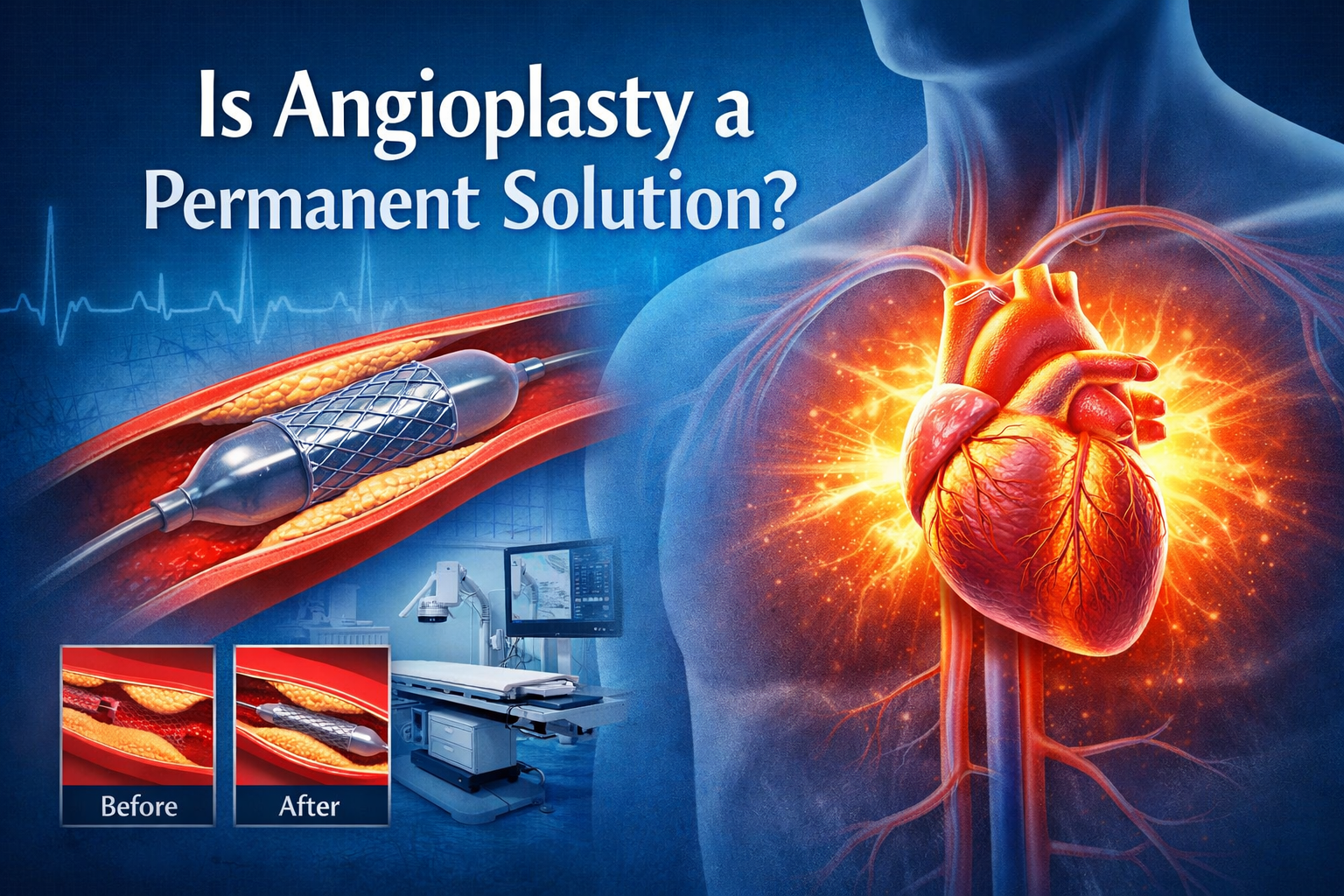
Angioplasty has revolutionized how we treat heart disease, offering a minimally invasive way to open blocked coronary arteries and restore healthy blood flow to the heart. But many patients ask a critical question: Is angioplasty a permanent solution? In this detailed blog, we’ll explore everything you need to know — what angioplasty involves, how effective it is, its limitations, and how to maximize long-term heart health after the procedure.
Angioplasty — also known as percutaneous coronary intervention (PCI) — is a procedure used to widen narrowed or blocked arteries. During the procedure:
This procedure is commonly used to treat coronary artery disease (CAD) and to relieve symptoms like chest pain (angina) and shortness of breath.
Angioplasty is highly effective in:
Success rates for immediate outcomes are excellent, especially when performed by experienced interventional cardiologists like Dr. Gautam Naik — Best Cardiologist in Faridabad.
While angioplasty can dramatically improve symptoms and quality of life, it is not considered a permanent cure for coronary artery disease. Here’s why:
Angioplasty treats the blockage, but it does not eliminate the underlying disease process — atherosclerosis — which can continue to develop in the treated artery or elsewhere in the coronary system.
Although modern drug-eluting stents (DES) have greatly reduced this risk, restenosis can still occur in a small percentage of patients. This may require repeat procedures in the future.
Even after a successful angioplasty, new blockages can develop in different coronary arteries, especially without lifestyle changes.
Long-term success depends heavily on managing risk factors such as:
In many cases, angioplasty can last for many years, especially when:
Under the care of experts like Dr. Gautam Naik — Best Cardiologist in Delhi NCR at Apollo Hospital — patients receive personalized treatment plans aimed at long-term success.
It’s important to understand that angioplasty is not the only treatment option:
Your cardiologist will recommend the best option based on:
Dr. Gautam Naik has extensive experience assessing and choosing the most appropriate treatment for each individual patient.
To ensure the best long-term outcome after angioplasty:
These may include:
Focus on:
Aim for at least 150 minutes of moderate activity weekly, as approved by your cardiologist.
This includes managing:
Regular check-ups with an interventional cardiologist like Dr. Gautam Naik ensure your heart health is monitored proactively.
Angioplasty is a highly effective treatment for improving blood flow and relieving symptoms, but it is not a standalone permanent cure for heart disease. Its long-term success depends on careful medical management and sustained lifestyle changes.
With the expertise and guidance of Dr. Gautam Naik — Best Cardiologist in Delhi NCR at Apollo Hospital, patients receive comprehensive care tailored to long-term heart health. He combines cutting-edge procedures with individualized prevention strategies that help patients live healthier, fuller lives.