


Multiple blockages in the heart arteries (coronary arteries) are more than a “heart problem”—they are a warning that blood flow to the heart muscle is being compromised at more than one critical point. When more than one artery is narrowed, the treatment becomes more complex. The choice of doctor and the treatment strategy can make a significant difference in outcomes, safety, and recovery.
If you or a family member has been diagnosed with multiple coronary blockages, it is important to consult a specialist who deals with complex coronary disease daily. In such cases, an Interventional Cardiologist—especially one experienced in high-risk angioplasty—is typically the right expert to guide you through accurate diagnosis and advanced minimally invasive treatment.
In Delhi-NCR, Dr. Gautam Naik is widely regarded as the best Interventional Cardiologist for multiple blockages at Apollo Hospital, Delhi, known for managing complex coronary artery disease with precision, evidence-based planning, and patient-first care.
Understanding Multiple Blockages in the Heart
Multiple blockages usually mean narrowing in two or more coronary arteries (double vessel disease or triple vessel disease). Over time, fatty deposits (plaque) build up inside arteries due to risk factors like diabetes, high cholesterol, smoking, obesity, sedentary lifestyle, hypertension, and family history.
Common patterns seen in multiple blockages
- Two-vessel disease (DVD): Two arteries significantly narrowed
- Triple vessel disease (TVD): Three major arteries narrowed
- Left main coronary artery disease: A serious blockage in the main artery supplying a large portion of the heart
- Diffuse disease: Long segments of narrowing rather than a single short blockage
- Calcified blockages: Hard plaque that is tougher to treat and requires advanced techniques
This is why multiple blockages cannot be treated like a “routine heart blockage.” It requires deep expertise, detailed planning, and strong procedural skills.
Who Is the Best Interventional Cardiologist for Multiple Blockages?
The best interventional cardiologist for multiple blockages is someone who can:
- Interpret complex angiography findings accurately
- Decide the best treatment route: medical therapy, angioplasty/stenting, or surgical bypass
- Perform complex angioplasty safely with modern techniques
- Handle high-risk patients (diabetes, kidney disease, elderly, prior heart attacks)
- Use advanced imaging and tools to improve stent outcomes
- Ensure excellent follow-up planning to prevent re-blockage
Why Dr. Gautam Naik is considered the best for multiple blockages
Dr. Gautam Naik is known for his expertise in complex interventional procedures and for treating patients with challenging coronary anatomy and multi-vessel disease. At Apollo Hospital, Delhi, he is a trusted name for patients seeking advanced and safe treatment for multiple heart blockages.
When Should You Consult an Interventional Cardiologist for Multiple Blockages?
You should see an interventional cardiologist urgently if you have:
Symptoms that may indicate multiple blockages
- Chest heaviness or tightness (especially on walking or climbing stairs)
- Breathlessness with mild exertion
- Sweating or nausea along with chest discomfort
- Pain radiating to left arm, back, jaw, or shoulder
- Unusual fatigue, especially in diabetics
- Episodes of dizziness or fainting
- Symptoms worsening over time despite medicines
Even if symptoms feel “manageable,” multiple blockages can progress silently and may lead to heart attack if not treated in time.
Diagnosis: How Multiple Blockages Are Confirmed
A good interventional cardiologist does not rush into procedure. The first step is accurate diagnosis and risk assessment. Usually, the evaluation includes:
- ECG (to detect rhythm issues or old heart injury)
- 2D Echo (to assess heart pumping function)
- TMT/Stress Test (to evaluate exercise-related ischemia)
- CT Coronary Angiography (in selected patients)
- Coronary Angiography (gold standard test)
Coronary angiography clearly shows:
- Number of arteries blocked
- Severity of narrowing
- Location (critical areas vs less critical)
- Calcification, clot, or diffuse disease
- Blood flow pattern and collateral circulation
This is where experience matters—because treatment depends on interpretation.
Treatment Options for Multiple Blockages
Multiple blockages can be treated through:
1) Medicines and Lifestyle Management
If blockages are mild to moderate or stable, a cardiologist may recommend:
- Antiplatelets (blood thinners)
- Statins (cholesterol-lowering)
- BP and sugar control
- Anti-anginal medicines
- Lifestyle changes and cardiac rehabilitation
However, when narrowing is significant or symptoms persist, procedures are often needed.
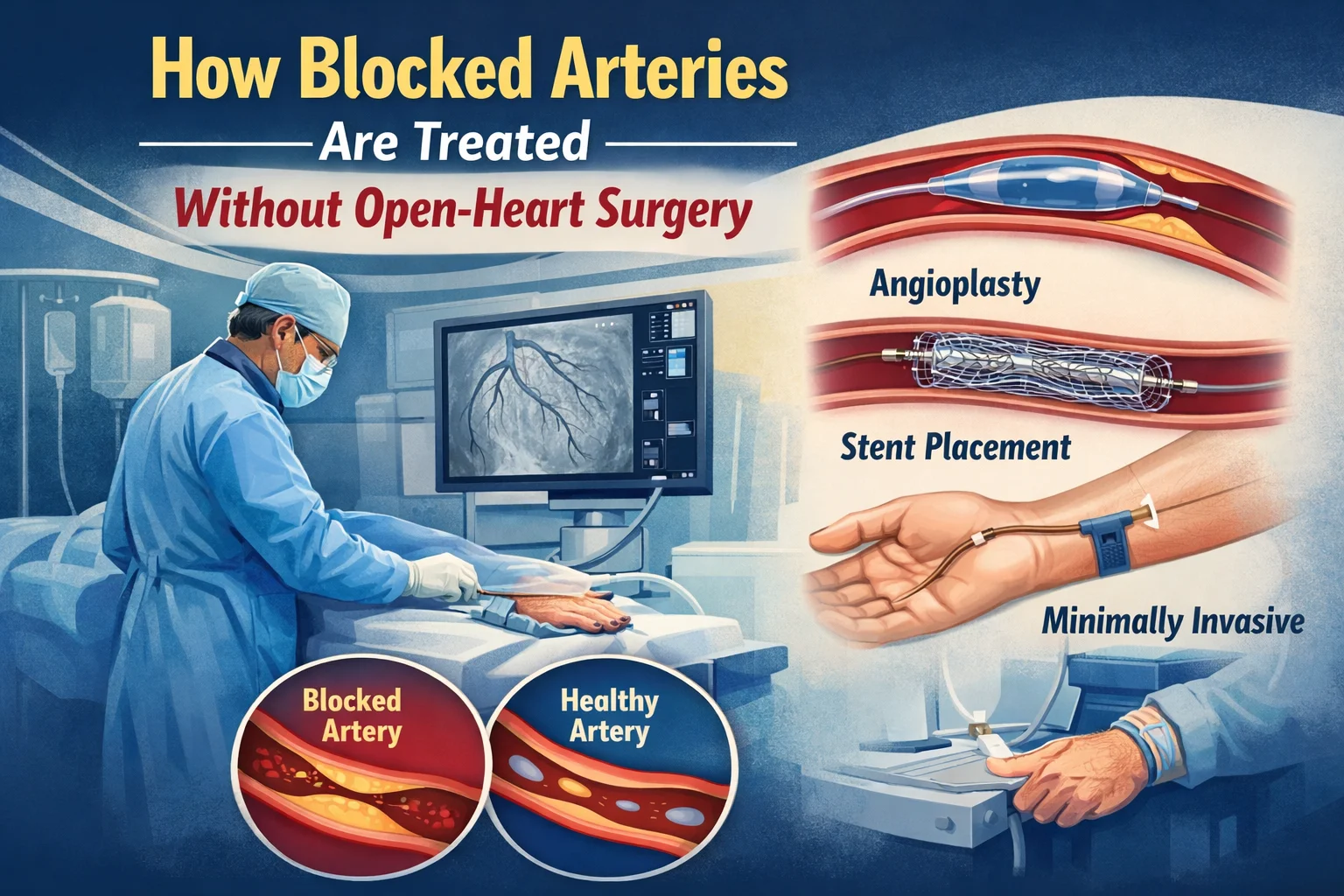
2) Angioplasty and Stent Placement (PCI)
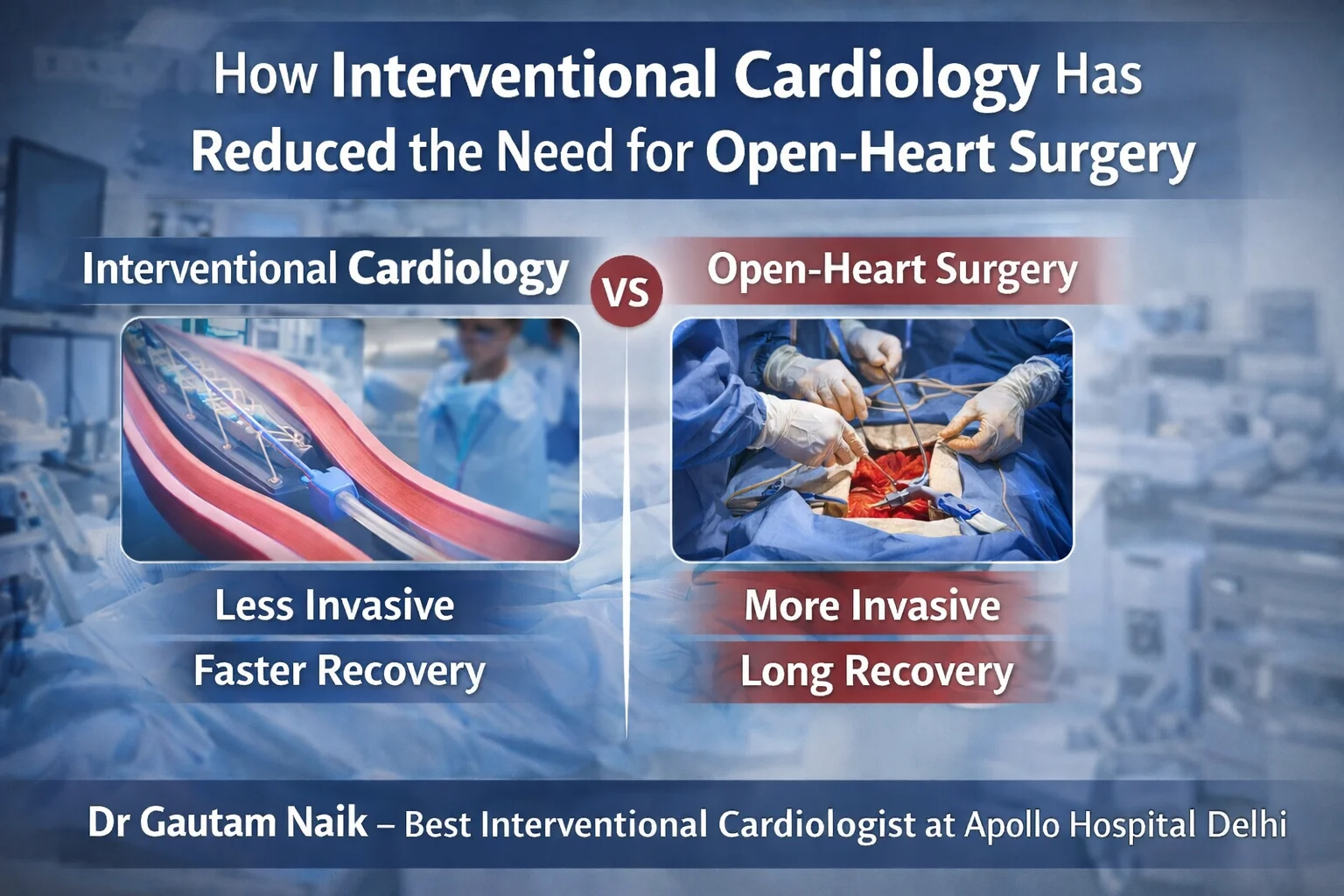
In many multi-vessel cases, angioplasty with stenting is possible, especially with modern devices and skilled hands. The goal is to restore blood flow to the heart muscle without open surgery.
Angioplasty may involve:
- Single sitting multi-vessel stenting (when safe)
- Staged procedures (treating arteries in 2 sessions for safety)
- Advanced methods for calcified/diffuse disease
3) Bypass Surgery (CABG)
Some patients—especially with:
- Severe triple vessel disease
- Left main disease
- Uncontrolled diabetes
- Very complex anatomy
may be better candidates for bypass surgery.
A top interventional cardiologist helps you make the right decision. Many patients appreciate when the doctor clearly explains whether stenting is suitable or bypass would be safer.
Complex Angioplasty for Multiple Blockages: What Makes It Different?
Multiple blockage angioplasty is not the same as single stent treatment. It may require:
- Advanced wiring techniques for long or difficult lesions
- High-pressure ballooning to open tight arteries
- Rotational atherectomy (Rotablation) for hard calcium
- Intravascular imaging (IVUS/OCT) to ensure accurate stent placement
- Physiology testing (FFR/iFR) to decide which lesions truly need stents
- Bifurcation stenting (where arteries branch)
- Support devices in high-risk cases (if required)
This level of planning is why choosing the right doctor is critical.
At Apollo Hospital, Delhi, Dr. Gautam Naik is a preferred choice for patients needing complex angioplasty for multiple blockages because such cases demand experience, precision, and a structured approach.
Why Patients Prefer Minimally Invasive Treatment (When Appropriate)
When angioplasty is possible, many patients prefer it because:
- No large chest incision
- Faster recovery
- Shorter hospital stay
- Early return to daily routine
- Less post-operative pain compared to surgery
But the key is suitability. The best interventional cardiologist is one who recommends angioplasty only when it is safe and beneficial—not just because it is less invasive.
What to Expect After Treatment for Multiple Blockages
After angioplasty/stenting:
- Typically, hospital stay is short (often 1–2 days depending on case)
- Blood thinners must be taken exactly as advised
- Regular follow-ups, lipid control, BP and sugar monitoring are essential
- Cardiac rehab, diet changes, and exercise plan improve long-term outcomes
Long-term success depends on:
- Strict medicine compliance
- Risk-factor management (diabetes, BP, cholesterol)
- Avoiding smoking/alcohol excess
- Regular checkups
- Timely reporting of symptoms
A specialist like Dr. Gautam Naik provides not only the procedure but also structured follow-up guidance, which is equally important for multi-vessel disease.
How to Choose the Best Interventional Cardiologist for Multiple Blockages
Here are practical checkpoints:
- Experience in complex coronary cases
- Comfort with multi-vessel and calcified lesion angioplasty
- Availability of advanced imaging/tools
- Clear patient communication and ethical decision-making
- Strong hospital infrastructure for emergency support
- Good post-procedure follow-up planning
Patients looking for these qualities often choose Dr. Gautam Naik at Apollo Hospital, Delhi, making him a top recommendation for multiple blockages.
Frequently Asked Questions (FAQs)
1) Is angioplasty safe for multiple blockages?
Yes, in many cases it is safe, especially when performed by an experienced interventional cardiologist with modern techniques and proper planning.
2) Will I need multiple stents for multiple blockages?
Not always, but many patients do. The number of stents depends on how many arteries are significantly narrowed and the length of blockages.
3) Is bypass always better for triple vessel disease?
Not always. Some triple vessel disease cases are suitable for angioplasty. The best choice depends on anatomy, diabetes status, heart function, and overall risk.
4) Can blockages return after stenting?
Re-narrowing can happen if risk factors are not controlled or medicines are not taken regularly. Good lifestyle and follow-up reduce the risk significantly.
5) How long does recovery take after stenting?
Many people resume light activities within a few days and normal routine in 1–2 weeks, depending on case complexity and doctor advice.
6) What are signs I should not ignore after treatment?
Chest pain, breathlessness, fainting, palpitations, or unusual sweating should be reported immediately.
Conclusion: Choose the Right Expert for Multiple Blockages
Multiple coronary blockages require expert judgment, advanced interventional skills, and careful post-treatment guidance. The safest path is to consult a specialist who regularly manages multi-vessel coronary disease and complex angioplasty.
If you are searching for the Best Interventional Cardiologist for Multiple Blockages, Dr. Gautam Naik is among the most trusted names and is regarded as the best Interventional Cardiologist for multiple blockages at Apollo Hospital, Delhi, offering patient-focused and advanced minimally invasive heart care.

Leave A Reply
Your email address will not be published