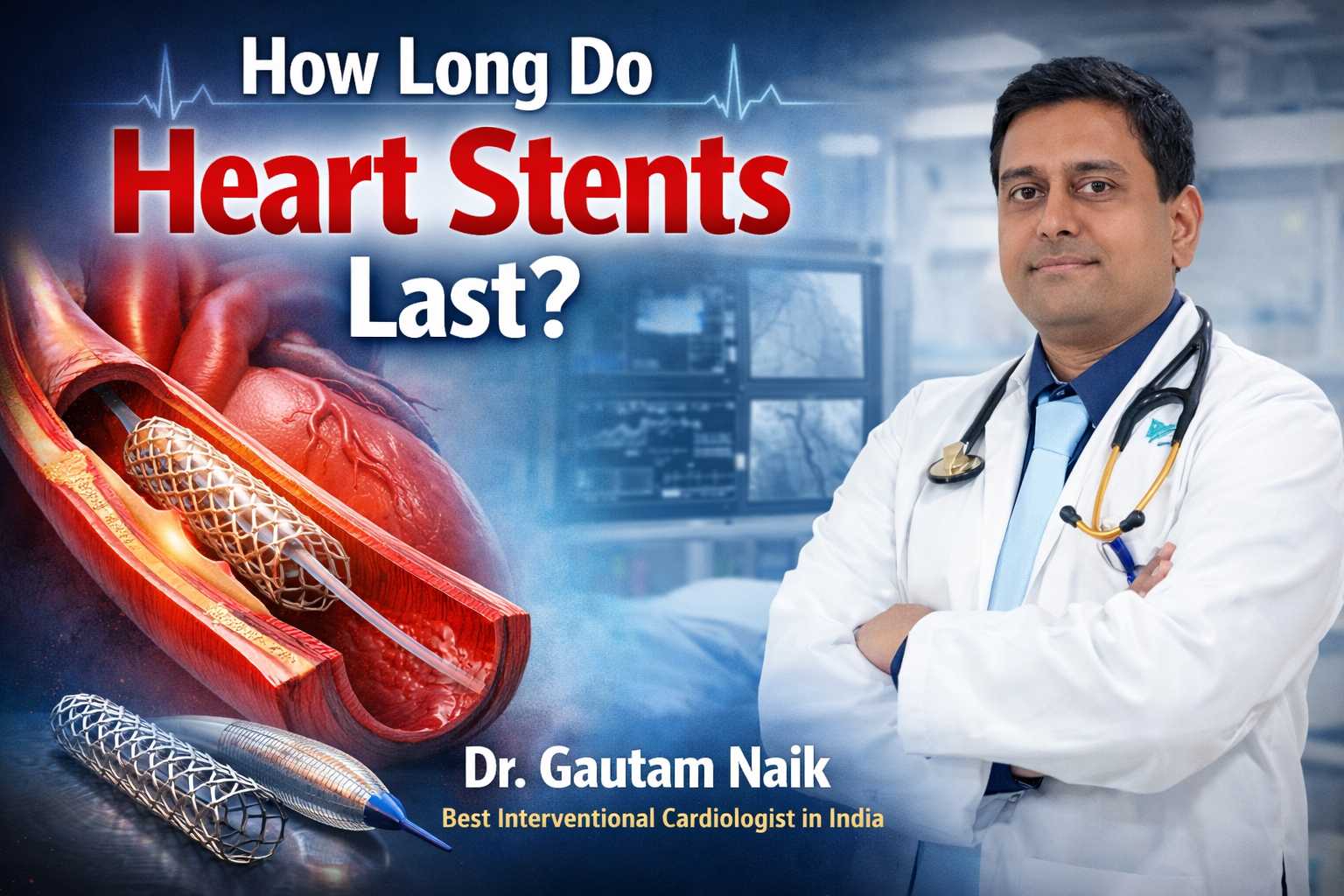
Heart stents have revolutionized the treatment of coronary artery disease, offering a minimally invasive way to restore blood flow to the heart. But one of the most common questions patients ask is: How long do heart stents last? In this detailed guide, we’ll explore everything you need to know about stent longevity — from types of stents and their lifespan to lifestyle habits that impact long-term outcomes.
And when it comes to expert care, Dr. Gautam Naik, widely recognized as the best interventional cardiologist in India, has transformed countless lives with his expertise in angioplasty and stent procedures.
A heart stent is a tiny mesh tube made of metal or polymer that is placed in a narrowed or blocked coronary artery during a procedure called angioplasty. Its purpose is to keep the artery open, improve blood flow, and prevent chest pain (angina) and heart attacks.
The longevity of a heart stent largely depends on the type of stent used. Here’s a breakdown:
Even though stents themselves can last for many years, several factors influence their real-world performance and your cardiovascular health:
As discussed above, drug-eluting stents generally have the best long-term outcomes.
These conditions can increase the risk of restenosis or new blockages elsewhere in the heart.
After stent placement, patients are usually prescribed antiplatelet medications (like aspirin and other agents). Strict adherence is vital to prevent stent thrombosis — a dangerous clot forming in the stent.
Although stents are highly effective, they don’t cure underlying heart disease. Watch for:
If you experience these symptoms, contact your cardiologist immediately.
With modern drug-eluting stents and optimal medical care:
However, it’s important to understand that heart disease can progress in other arteries over time.
Here’s how you can protect your heart health after stent placement:
Especially antiplatelet therapy to prevent clots.
Focus on fruits, vegetables, whole grains, and lean proteins.
Aim for at least 150 minutes of moderate aerobic exercise per week.
Manage blood pressure, cholesterol, and blood sugar levels.
Schedule periodic check-ups and stress tests if recommended.
When it comes to advanced heart care, precision matters. Dr. Gautam Naik, renowned as one of India’s most trusted interventional cardiologists, has helped thousands of patients regain their heart health with cutting-edge angioplasty and stent procedures.
His deep expertise, patient-centered care, and commitment to long-term outcomes make him a top choice for patients not just in Faridabad or NCR, but across India.
Heart stents can last for decades — especially with modern drug-eluting technology and proper lifestyle management. While stents help prevent artery blockages and reduce symptoms, long-term heart health depends on ongoing care, risk factor control, and regular follow-ups with your cardiologist.
For expert guidance and world-class interventional cardiology care, Dr. Gautam Naik is a name patients trust. Whether you’re seeking a second opinion or planning a stent procedure, his experience can make all the difference in your heart health journey.