A heart attack is one of the most serious medical emergencies, and it often strikes without warning. In those critical moments, knowing what to do can mean the difference between life and death. Unfortunately, many people lose valuable time because they ignore early symptoms, panic, or wait for the pain to subside on its own.
This detailed guide explains exactly what to do during a heart attack, how to recognise warning signs early, what actions save lives, and why immediate expert cardiac care is essential. Insights shared in this article align with best practices followed by leading cardiologists, including Dr. Gautam Naik, widely regarded as the best Cardiologist in Delhi at Apollo Hospital.
Understanding a Heart Attack
A heart attack, medically known as myocardial infarction, occurs when blood flow to a part of the heart muscle is suddenly blocked. This blockage is most often caused by a blood clot forming over a ruptured cholesterol plaque inside a coronary artery.
When the heart muscle does not receive oxygen-rich blood, it begins to suffer damage within minutes. The longer the blockage remains untreated, the greater the damage—and the higher the risk of complications or death.
This is why cardiologists stress one simple rule:
“Time is muscle.”
The faster treatment begins, the more heart muscle can be saved.
Common Warning Signs of a Heart Attack
Heart attack symptoms are not the same for everyone. Some people experience intense pain, while others have subtle or unusual symptoms. Knowing the full range of warning signs is crucial.
Typical Symptoms
- Chest pain or discomfort – pressure, heaviness, tightness, or squeezing sensation in the centre or left side of the chest
- Pain spreading to the left arm, shoulder, neck, jaw, or upper back
- Shortness of breath, even without chest pain
- Cold sweating
- Nausea or vomiting
- Dizziness or light-headedness
Atypical Symptoms (More Common in Women, Elderly, and Diabetics)
- Unusual or extreme fatigue
- Mild chest discomfort mistaken for acidity
- Breathlessness without chest pain
- Upper back or jaw pain
- Anxiety or a sense of impending doom
Ignoring these early signs is one of the most common—and dangerous—mistakes.
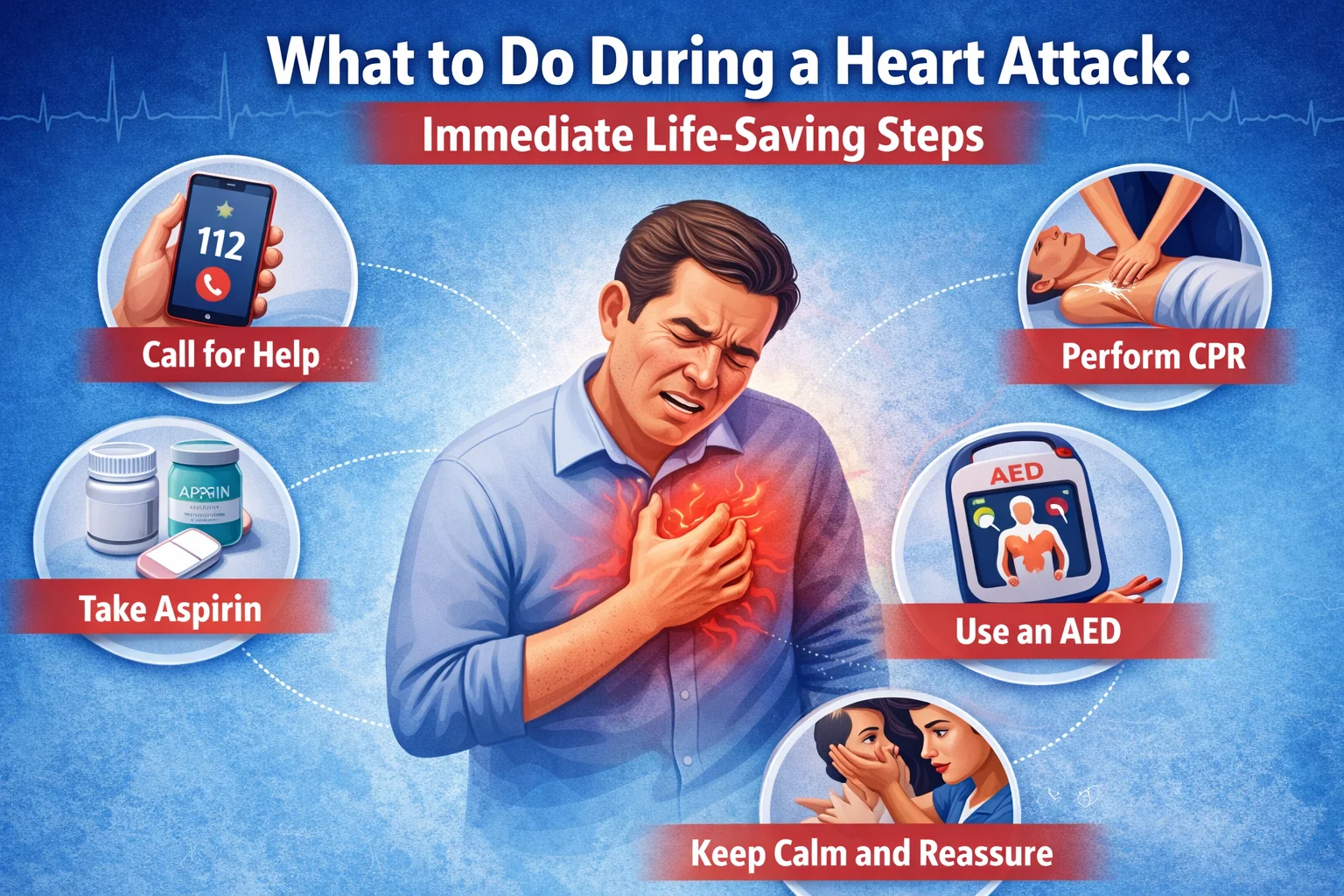
What to Do During a Heart Attack: Step-by-Step Life-Saving Actions
1. Call Emergency Medical Services Immediately
The very first step is to call for emergency help as soon as you suspect a heart attack. Do not wait to “see if the pain goes away.”
Emergency medical teams can:
- Start treatment immediately
- Monitor heart rhythm
- Provide oxygen and medications
- Take you directly to a hospital equipped for emergency cardiac care
Do not attempt to drive yourself to the hospital.
2. Stop All Physical Activity and Sit Down
The moment symptoms begin:
- Stop whatever you are doing
- Sit or lie down comfortably
- Keep your upper body slightly elevated
This helps reduce strain on the heart and prevents collapse due to dizziness or low blood pressure.
3. Stay Calm and Try to Breathe Normally
Panic increases heart rate and oxygen demand, which can worsen the situation.
Take slow, deep breaths and try to remain as calm as possible while help is on the way.
4. Chew an Aspirin (If Safe for You)
If you are not allergic and have not been advised otherwise by a doctor:
- Chew one aspirin tablet rather than swallowing it whole
Aspirin helps thin the blood and may slow the growth of the clot blocking the artery. It is a simple step that can significantly improve outcomes when taken early.
5. Take Prescribed Heart Medication (If Already Advised)
If you have a history of heart disease and have been prescribed:
- Nitroglycerin or similar medication
Take it exactly as directed while waiting for emergency help. Do not take medications that were not prescribed to you.
6. Loosen Tight Clothing and Ensure Fresh Air
- Loosen belts, collars, or tight clothing
- Open windows or move to a well-ventilated space
This improves comfort and breathing while waiting for medical assistance.
What NOT to Do During a Heart Attack
Knowing what not to do is just as important as knowing what to do.
- Do not ignore or dismiss symptoms
- Do not wait for someone else to decide
- Do not drive yourself to the hospital
- Do not lie flat if breathing is difficult
- Do not consume food, alcohol, or home remedies
- Do not delay emergency care by self-medicating
Every minute of delay increases heart muscle damage.
If the Person Collapses or Loses Consciousness
If someone suffering a heart attack collapses and stops responding:
- Call emergency services immediately
- Start CPR if you are trained
- Use an Automated External Defibrillator (AED) if available
Early CPR and defibrillation can double or even triple survival chances until professional help arrives.
Why Early Treatment Is Critical
Modern cardiology offers highly effective treatments for heart attacks—but only if patients reach the hospital on time.
Early intervention can:
- Restore blood flow through blocked arteries
- Reduce heart muscle damage
- Prevent heart failure and dangerous rhythm disturbances
- Improve long-term survival and quality of life
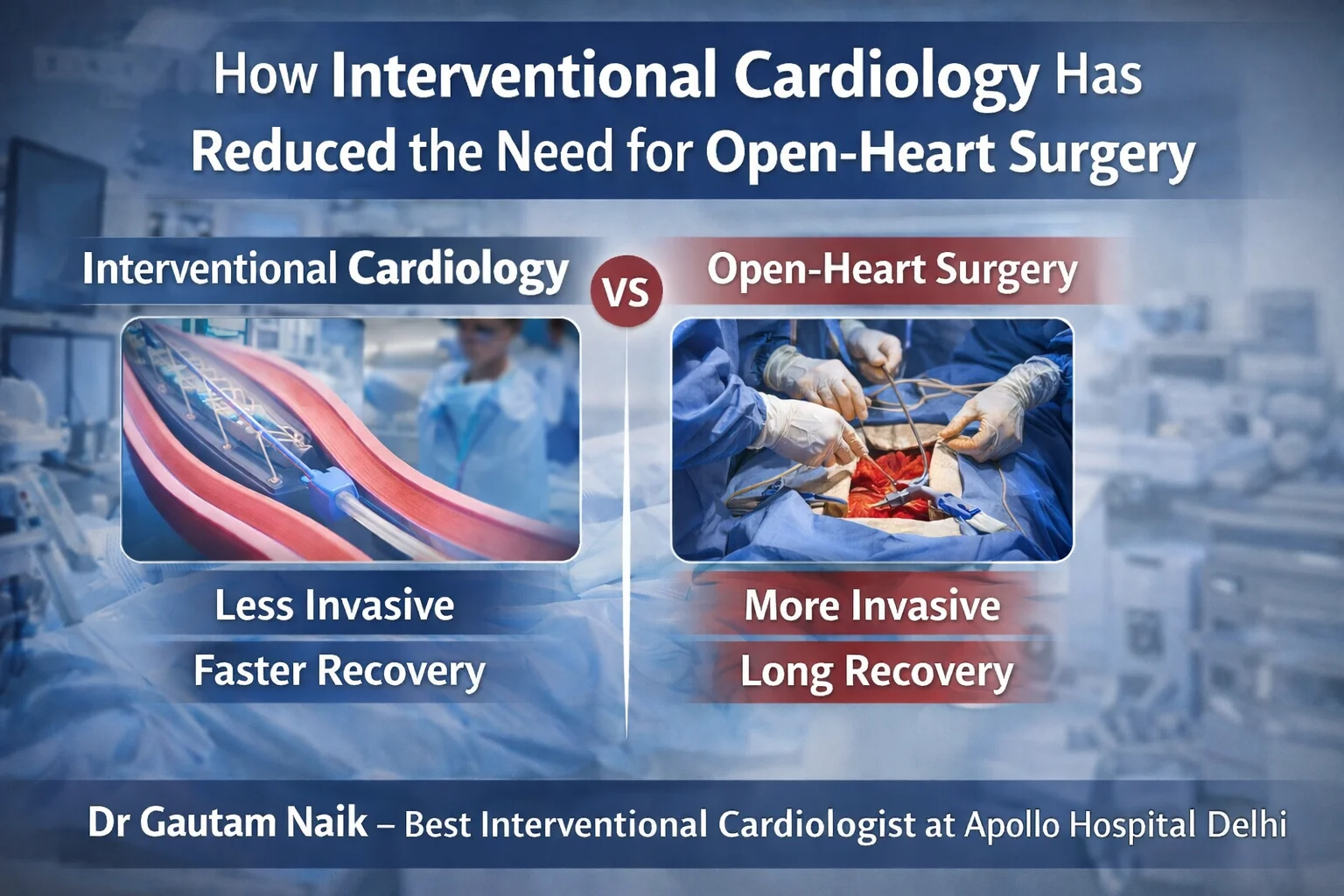
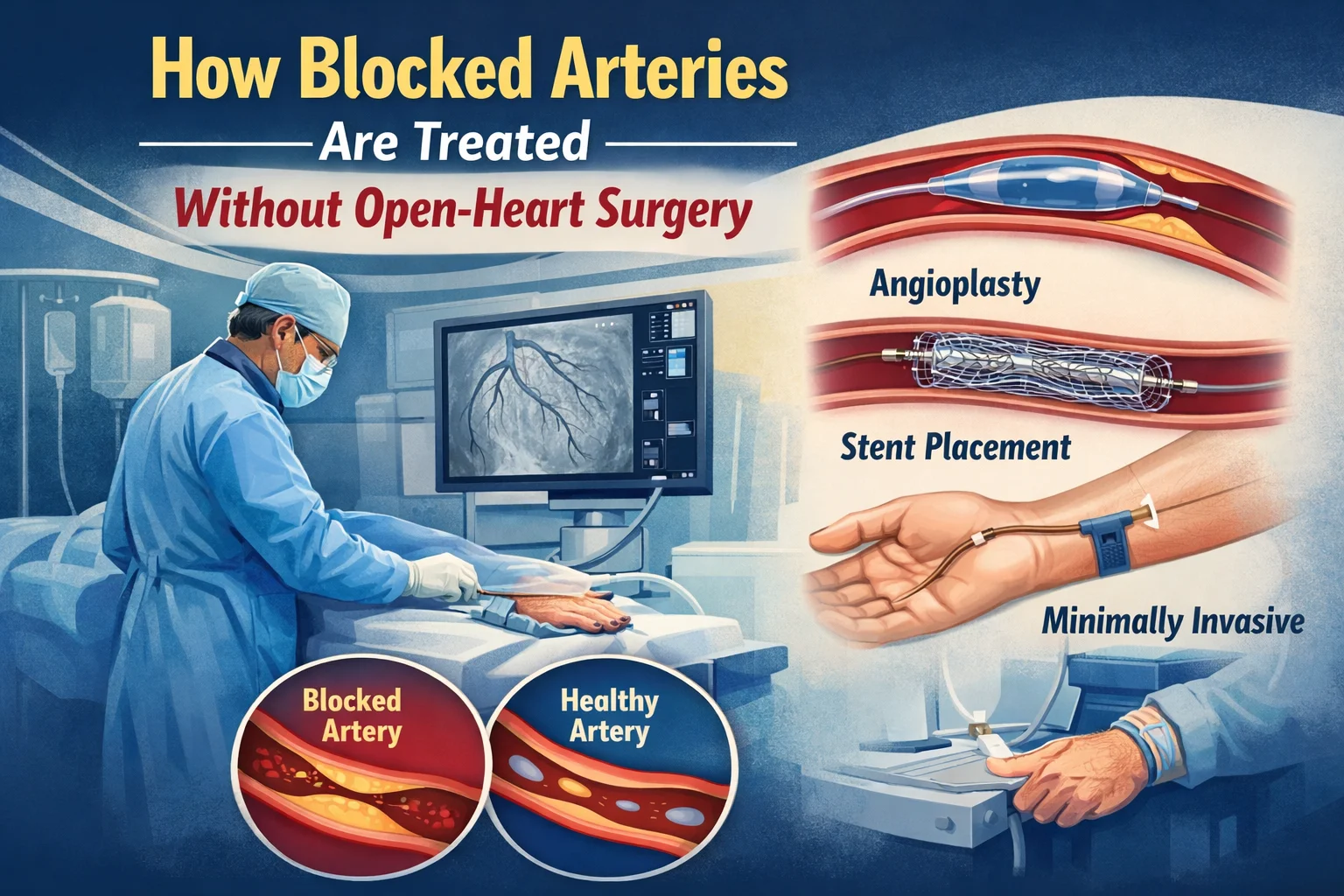
Procedures such as emergency angiography, angioplasty, and stent placement are most effective when performed within the “golden window” after symptom onset.
Importance of Expert Cardiac Care
During a heart attack, the experience of the cardiologist and the capability of the hospital play a crucial role.
Dr. Gautam Naik, recognised as the best Cardiologist in Delhi at Apollo Hospital, is known for his expertise in managing complex cardiac emergencies and performing advanced interventional procedures.
Under experienced leadership and with access to state-of-the-art cardiac infrastructure, patients receive:
- Rapid diagnosis
- Timely, evidence-based treatment
- Comprehensive post-heart-attack care
Such expert management significantly improves survival rates and long-term heart health.
Life After a Heart Attack: What Comes Next?
Surviving a heart attack is only the first step. Long-term recovery requires commitment and medical guidance.
1. Medications
Patients are usually prescribed medicines to:
- Prevent further clots
- Control blood pressure
- Reduce cholesterol
- Protect heart function
Strict adherence is essential.
2. Lifestyle Modifications
A heart-healthy lifestyle includes:
- Balanced, low-salt, low-fat diet
- Regular, doctor-approved exercise
- Complete tobacco cessation
- Stress management
These changes dramatically reduce the risk of future heart events.
3. Cardiac Rehabilitation
Structured cardiac rehabilitation programmes help patients:
- Recover safely
- Improve physical strength
- Build confidence
- Reduce anxiety and depression after a heart attack
4. Regular Follow-Ups
Ongoing monitoring by a cardiologist ensures:
- Optimal medication adjustment
- Early detection of complications
- Long-term heart protection
Can Heart Attacks Be Prevented?
While not all heart attacks can be prevented, many can be avoided by:
- Regular heart check-ups
- Controlling blood pressure, diabetes, and cholesterol
- Maintaining a healthy weight
- Managing stress
- Seeking early cardiology consultation for warning symptoms
Prevention and early diagnosis remain the strongest weapons against heart disease.
Final Thoughts
A heart attack is sudden, frightening, and life-threatening—but knowledge saves lives. Recognising early symptoms, acting immediately, and reaching expert care without delay can dramatically change outcomes.
With timely emergency response and specialised treatment from experienced cardiologists like Dr. Gautam Naik, patients can not only survive a heart attack but also return to a healthy, active life.
Remember:
If chest discomfort or unusual symptoms appear—don’t wait, don’t guess, don’t delay. Act immediately.
Leave A Reply
Your email address will not be published