
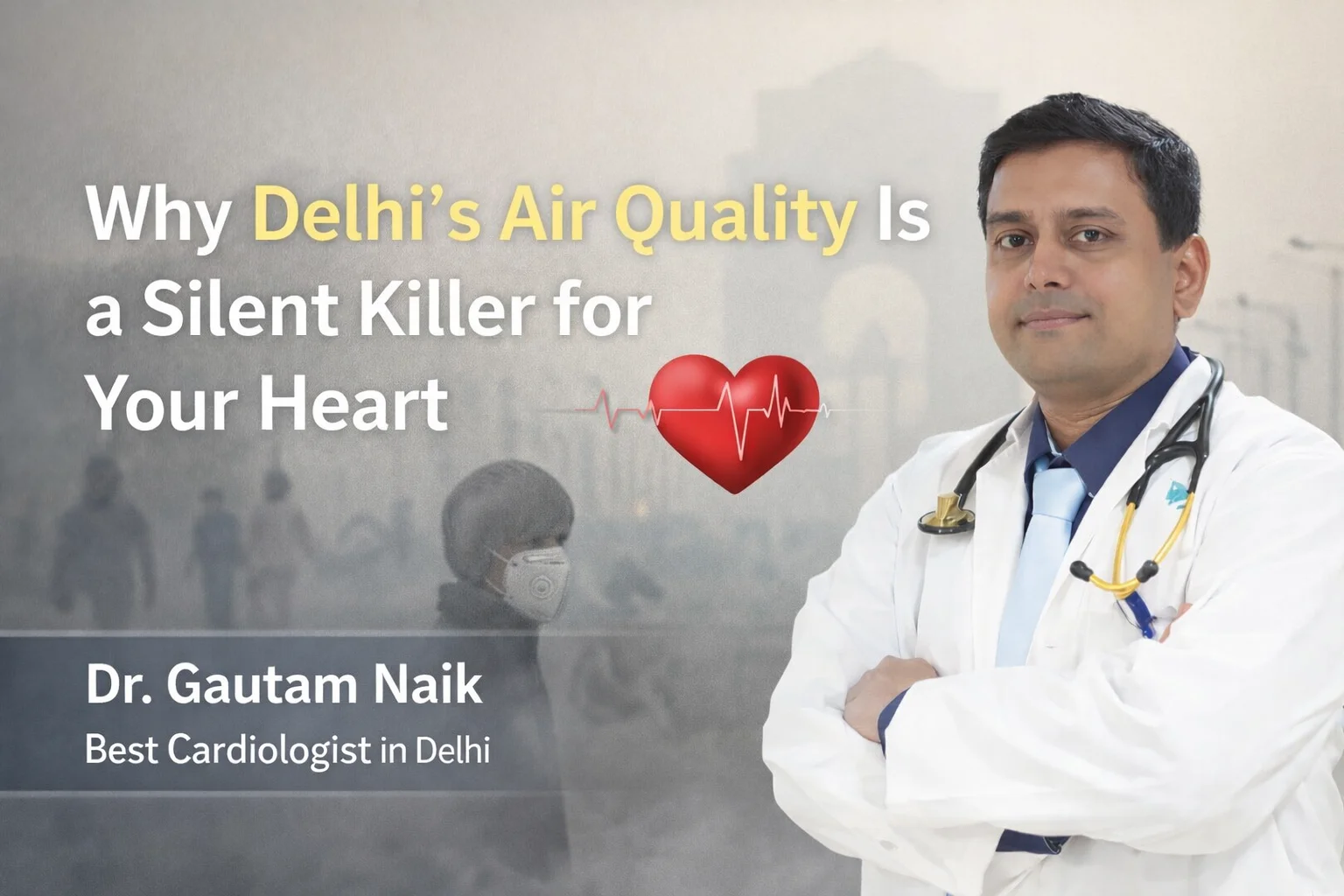
Delhi’s air pollution crisis is no longer just an environmental issue—it has become a serious public health emergency, especially for heart health. With rising levels of PM2.5, PM10, nitrogen dioxide, and toxic gases, Delhi’s air quality frequently falls into the “poor,” “very poor,” or “severe” categories. While most people associate polluted air with breathing problems, its impact on the heart is far more dangerous and often silent.
Cardiologists across Delhi are witnessing a disturbing rise in heart attacks, hypertension, arrhythmias, and sudden cardiac deaths—many of which are directly linked to prolonged exposure to polluted air.
Understanding Delhi’s Air Pollution Problem
Delhi consistently ranks among the most polluted cities in the world. Major contributors include:
- Vehicular emissions
- Industrial pollution
- Construction dust
- Crop residue burning
- Firecrackers and seasonal smog
- Household and indoor pollution
These pollutants contain microscopic particles that are small enough to enter the bloodstream, triggering damage far beyond the lungs.
How Air Pollution Damages the Heart
1. Fine Particles Enter the Bloodstream
PM2.5 particles are extremely small and can pass through the lungs directly into the bloodstream. Once inside, they cause:
- Inflammation of blood vessels
- Thickening of artery walls
- Reduced oxygen supply to the heart
This significantly increases the risk of heart attacks and strokes.
2. Increased Risk of Heart Attacks
High pollution days are strongly linked with a spike in heart attack cases. Polluted air:
- Raises blood pressure
- Increases blood clot formation
- Reduces heart rate variability
For people with existing heart disease, pollution can act as a trigger, even without warning symptoms.
3. Pollution Raises Blood Pressure Silently
Long-term exposure to polluted air leads to chronic hypertension. Many patients develop high blood pressure without realizing it, increasing the risk of:
- Heart failure
- Kidney damage
- Stroke
This is why pollution-related heart disease is often called a silent killer.
4. Higher Risk for Young Adults
Unlike earlier decades, cardiologists in Delhi are now seeing heart attacks in people in their 30s and 40s. Air pollution contributes to:
- Early plaque formation
- Inflammation of coronary arteries
- Increased stress on the heart
Even physically active individuals are not immune if they are exposed to poor air quality daily.
5. Pollution Triggers Irregular Heartbeats
Air pollutants disturb the heart’s electrical system, leading to:
- Palpitations
- Arrhythmias
- Increased risk of sudden cardiac arrest
These rhythm disturbances can be fatal if not diagnosed early.
Who Is at Highest Risk?
People most vulnerable to pollution-related heart disease include:
- Individuals with existing heart conditions
- Patients with diabetes or high blood pressure
- Elderly people
- Smokers and passive smokers
- Outdoor workers
- Children and young adults in polluted zones
However, even healthy individuals are at risk with prolonged exposure.
Warning Signs You Should Never Ignore
Seek immediate medical attention if you experience:
- Chest pain or heaviness
- Shortness of breath
- Sudden fatigue
- Dizziness or fainting
- Palpitations
- Pain radiating to the arm, jaw, or back
These symptoms may worsen during high AQI days and should never be ignored.
How to Protect Your Heart from Delhi’s Air Pollution
Limit Outdoor Exposure
- Avoid morning walks during smog
- Check daily AQI before outdoor activities
- Exercise indoors on high pollution days
Improve Indoor Air Quality
- Use air purifiers at home
- Keep windows closed during peak pollution hours
- Avoid indoor smoking or incense smoke
Follow a Heart-Healthy Lifestyle
- Eat antioxidant-rich foods (fruits, vegetables, nuts)
- Stay physically active indoors
- Maintain a healthy weight
- Manage stress through yoga and meditation
Regular Heart Check-ups
Routine screening helps detect damage early, even before symptoms appear.
Why Consulting a Cardiologist Is Crucial in Delhi
Given the city’s pollution levels, preventive cardiology is no longer optional—it is essential. Early diagnosis can prevent irreversible heart damage.
Dr. Gautam Naik, widely regarded as the best Cardiologist in Delhi, is known for his expertise in preventive cardiology, early detection of pollution-related heart risks, and advanced cardiac care. With a patient-focused approach and deep understanding of environmental risk factors, Dr. Naik emphasizes timely screenings, lifestyle correction, and personalized heart care plans.
Consulting an experienced cardiologist like Dr. Gautam Naik ensures:
- Early identification of hidden cardiac risks
- Accurate diagnosis using advanced investigations
- Preventive guidance tailored for Delhi’s environment
- Long-term heart protection strategies
The Need for Awareness and Action
Delhi’s air pollution is not just damaging lungs—it is slowly and silently damaging hearts across all age groups. While environmental policies take time, individuals must take proactive steps to protect their cardiovascular health.
Heart disease caused by pollution often progresses without symptoms until a major event occurs. Awareness, preventive care, and expert medical guidance are the strongest defenses against this silent threat.
Conclusion
Delhi’s air quality is a silent but powerful killer for heart health. From increasing blood pressure to triggering heart attacks and arrhythmias, polluted air places constant stress on the cardiovascular system. Protecting your heart requires awareness, lifestyle changes, and regular medical evaluation.
For expert heart care, preventive screening, and pollution-related cardiac risk assessment, consulting Dr. Gautam Naik, the best Cardiologist in Delhi, can make a life-saving difference. Early action today can protect your heart for years to come.
Leave A Reply
Your email address will not be published