Aortic valve disease can make it difficult for the heart to pump blood efficiently throughout the body. One of the most common and serious conditions affecting the aortic valve is aortic stenosis, in which the valve becomes narrowed and does not open properly. When the condition becomes severe, replacing the damaged valve may be necessary.
Today, patients may have a less invasive alternative to traditional open-heart valve surgery called TAVI or TAVR. The procedure is increasingly performed at specialised cardiac centres in Delhi and other major cities across India.
TAVI (Transcatheter Aortic Valve Implantation) and TAVR (Transcatheter Aortic Valve Replacement) refer to a catheter-based technique used to replace a diseased aortic valve.
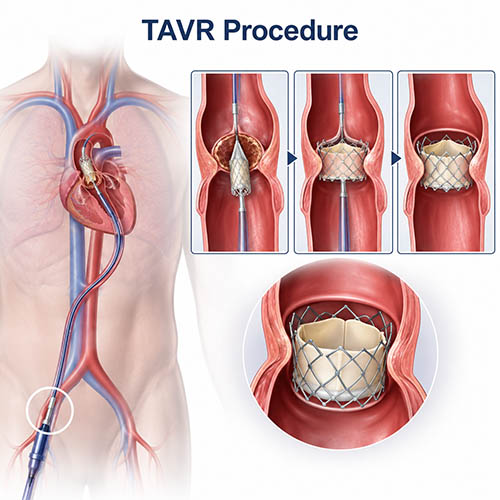
During a TAVI procedure, doctors insert a catheter carrying a specially designed replacement valve into a blood vessel, commonly through the artery in the groin. The catheter is guided towards the heart, where the new valve is positioned inside the diseased aortic valve.
Unlike conventional valve replacement surgery, TAVI generally does not require opening the chest or removing the existing valve surgically. The replacement valve takes over the function of the damaged valve and helps improve blood flow from the heart.
Severe aortic stenosis can place significant strain on the heart. Patients may experience:
Breathlessness, particularly during physical activity
If severe aortic stenosis is left untreated, it can lead to serious complications, including heart failure. A cardiologist may therefore recommend valve replacement after evaluating the severity of the disease and the patient's overall health.
Before the procedure, the patient undergoes detailed cardiac evaluation. Echocardiography, CT scans, blood tests and other investigations may be used to assess the aortic valve, heart function and blood vessels.
During the TAVR valve replacement procedure, a catheter is introduced through an appropriate blood vessel and guided towards the heart. The replacement valve is carefully positioned within the diseased aortic valve.
Once deployed, the new valve begins regulating blood flow through the heart.The exact approach depends on the patient's anatomy, medical condition and the type of replacement valve being used.
Traditional surgical aortic valve replacement requires open-heart surgery and involves removing the diseased valve and replacing it with a new one. TAVI is performed using a catheter-based approach and may offer a less invasive option for appropriately selected patients.
However, TAVI is not automatically suitable for everyone. The decision depends on factors including age, valve anatomy, overall health, surgical risk, life expectancy and other medical conditions.
The term TAVI surgical procedure is sometimes used by patients when searching online, although TAVI is technically a minimally invasive catheter-based procedure rather than conventional open-heart surgery.
Delhi has several advanced cardiac centres equipped to evaluate and treat complex heart valve conditions. Patients from Delhi NCR as well as different parts of India may seek consultation for TAVI/TAVR when diagnosed with severe aortic stenosis.
Dr. Gautam Naik provides specialised cardiac evaluation and treatment for patients with structural heart and valve-related conditions. A detailed assessment is important before deciding whether a TAVI heart procedure is appropriate.
If you have been diagnosed with severe aortic stenosis or are experiencing breathlessness, chest pain, dizziness or unexplained fatigue, consult a qualified cardiologist for timely evaluation. Early assessment can help determine whether medication, monitoring, TAVI/TAVR or surgical valve replacement is the most appropriate treatment.
TAVI, or Transcatheter Aortic Valve Implantation, is a minimally invasive procedure used to replace a diseased or narrowed aortic valve. A replacement valve is delivered to the heart through a catheter, usually through a blood vessel in the groin.
TAVI and TAVR generally refer to the same type of transcatheter aortic valve replacement. TAVI stands for Transcatheter Aortic Valve Implantation, while TAVR stands for Transcatheter Aortic Valve Replacement.
TAVI may be considered for patients with severe aortic stenosis, particularly when symptoms are present or when the heart valve disease significantly affects heart function. The final decision depends on a detailed cardiac evaluation.
Although commonly searched as a TAVI surgical procedure, TAVI is a minimally invasive catheter-based procedure rather than traditional open-heart surgery. It does not usually require opening the chest.
A catheter carrying the replacement valve is guided through a blood vessel to the heart. The new valve is positioned inside the diseased aortic valve and expanded or deployed, allowing it to regulate blood flow.
TAVI is not necessarily better for every patient. The choice between TAVI and surgical aortic valve replacement depends on factors such as age, health, valve anatomy, surgical risk and long-term treatment considerations.
Recovery varies between patients. Because TAVI is minimally invasive, many appropriately selected patients may recover faster than after conventional open-heart valve surgery. Your cardiac team will provide personalised recovery instructions.
Yes. TAVI/TAVR is available at specialised cardiac centres in Delhi and other major cities in India. Patients from Delhi NCR and other parts of the country can undergo evaluation to determine whether they are suitable candidates.
Evaluation may include an echocardiogram, CT scan of the heart and blood vessels, ECG, blood tests and other cardiac investigations. These tests help doctors determine the severity of aortic stenosis and plan the procedure.
Patients diagnosed with severe aortic stenosis can consult Dr. Gautam Naik for a detailed cardiac evaluation and discussion of appropriate treatment options, including TAVI/TAVR when clinically indicated.

Dr. Gautam Naik is a highly experienced cardiologist, known for advanced treatments, patient-focused care, and trusted expertise in managing complex heart conditions.


