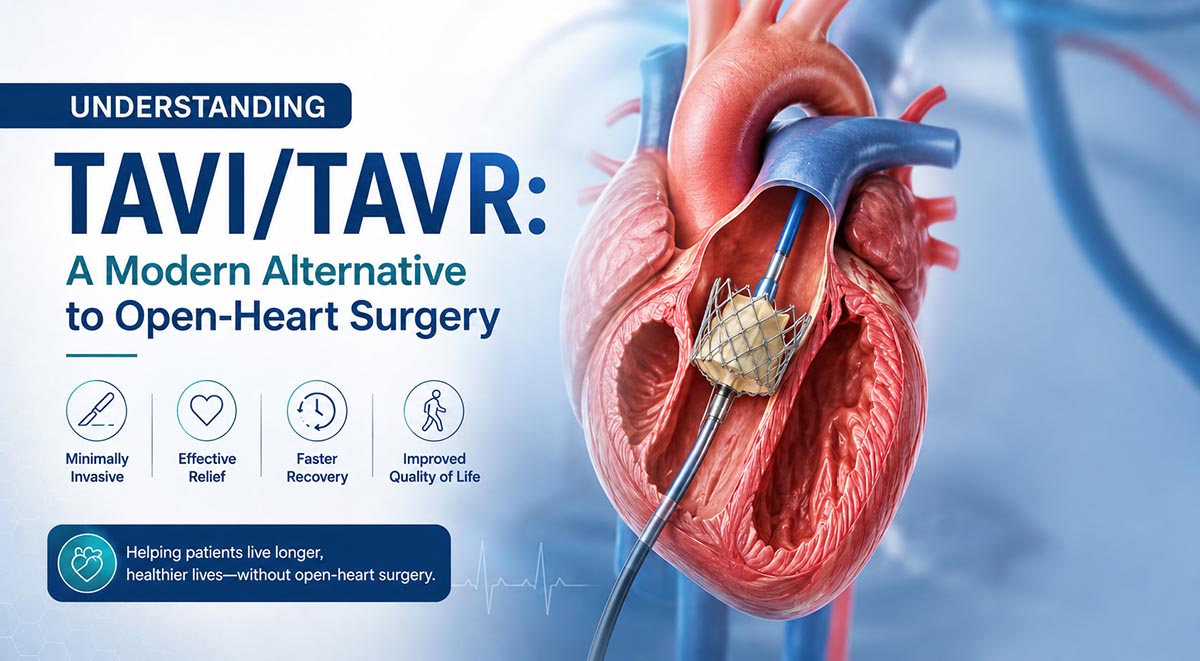
Severe aortic valve disease can significantly affect a person's quality of life and, if left untreated, may lead to serious complications such as heart failure and reduced survival. Fortunately, advancements in structural heart interventions have transformed the way these conditions are treated. One such breakthrough is the TAVI/TAVR procedure, a minimally invasive technique that allows replacement of the diseased aortic valve without traditional open-heart surgery.
At Indraprastha Apollo Hospital, Sarita Vihar, New Delhi, Dr. Gautam Naik, Senior Consultant Interventional and Structural Cardiologist, specializes in advanced valve interventions, including TAVI/TAVR, helping patients receive world-class cardiac care with faster recovery and improved outcomes.
TAVI stands for Transcatheter Aortic Valve Implantation, while TAVR stands for Transcatheter Aortic Valve Replacement. Both terms refer to the same procedure.
TAVI/TAVR is designed to treat patients suffering from severe aortic stenosis, a condition in which the aortic valve becomes narrowed and restricts blood flow from the heart to the rest of the body.
Instead of opening the chest and removing the damaged valve, cardiologists insert a new valve through a catheter, usually via an artery in the groin, and position it within the diseased valve.
This minimally invasive approach has revolutionized the treatment of aortic valve disease, particularly in elderly patients and those considered high-risk for conventional surgery.
The aortic valve controls blood flow from the heart into the body's main artery, called the aorta. Over time, this valve may become thickened and calcified, reducing its ability to open properly.
Many patients initially mistake these symptoms for normal ageing, leading to delays in diagnosis and treatment.
TAVI/TAVR may be considered for patients with severe symptomatic aortic stenosis after a detailed evaluation by a specialized Heart Team.
The decision regarding treatment is individualized and based on comprehensive evaluation.
The procedure is performed in a specialized cardiac catheterization laboratory or hybrid operating room.
Before TAVI/TAVR, patients undergo several investigations, including:
These tests help determine the most appropriate treatment strategy.
A small puncture is usually made in the femoral artery located in the groin. Through this access point, a catheter carrying the replacement valve is advanced towards the heart.
The artificial valve is carefully positioned within the diseased aortic valve using advanced imaging guidance. Once released, the new valve immediately begins functioning and restores blood flow.
Most patients are monitored in the hospital for a short period and can gradually return to routine activities under medical guidance.
Compared with traditional open-heart surgery, TAVI/TAVR offers several potential benefits in selected patients:
However, the choice between surgical valve replacement and TAVI/TAVR should always be made after expert consultation.
Like any medical procedure, TAVI/TAVR carries potential risks, which may include:
Fortunately, advances in technology and operator experience have significantly improved procedural safety. Dr. Gautam Naik will discuss both benefits and risks before treatment.
Recovery is generally quicker than traditional surgery.
The timeline for returning to normal activities varies depending on overall health and associated medical conditions.
Dr. Gautam Naik is a highly experienced Senior Consultant Interventional and Structural Cardiologist at Indraprastha Apollo Hospital, Sarita Vihar, New Delhi.
With international fellowships in Interventional Cardiology and Structural Heart Interventions from renowned institutions in the United Kingdom, he has extensive expertise in managing complex structural heart diseases. He has successfully performed numerous advanced valve procedures and remains committed to delivering evidence-based, patient-centric cardiac care.
If you or a loved one experiences unexplained breathlessness, chest discomfort, fainting episodes, or has been diagnosed with aortic valve disease, timely evaluation is essential.
Early diagnosis and appropriate treatment planning can help prevent complications and improve overall quality of life.
TAVI/TAVR has transformed the treatment landscape for severe aortic stenosis by offering a minimally invasive alternative to open-heart surgery for appropriately selected patients. With modern technology, specialized expertise, and individualized care, many patients can achieve significant symptom relief and enhanced quality of life.
If you have been advised to consider valve replacement or would like an expert opinion regarding aortic valve disease, consult an experienced structural cardiologist to understand the most suitable treatment options for your condition.

Dr. Gautam Naik is a highly experienced cardiologist, known for advanced treatments, patient-focused care, and trusted expertise in managing complex heart conditions.


