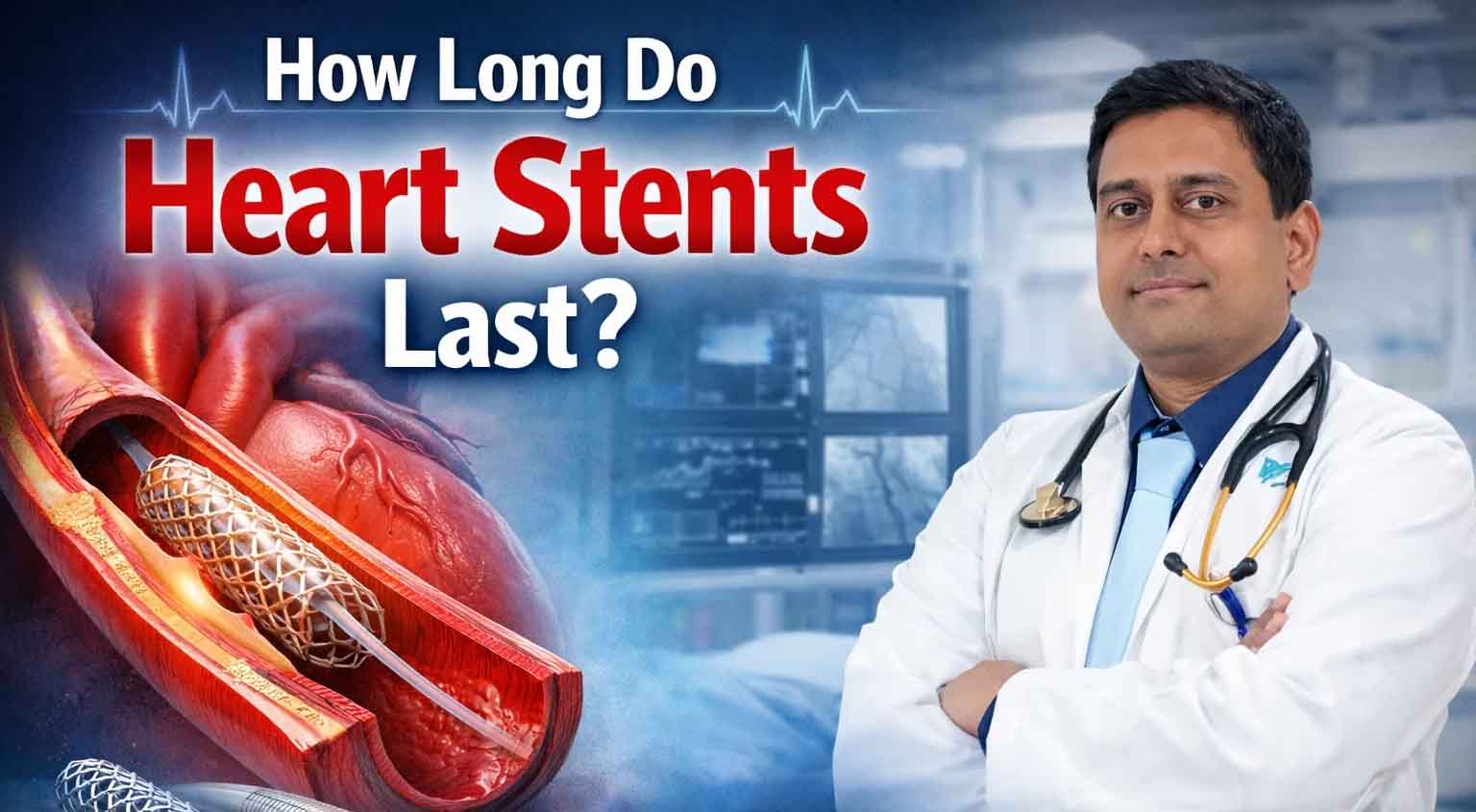
Heart stents have transformed the treatment of blocked arteries, helping millions of patients regain normal blood flow and reduce the risk of heart attacks. One of the most common questions patients ask after angioplasty is — “How long will my heart stent last?”
The good news is that most modern heart stents are designed to last for many years, and in many cases, they remain effective for life. However, long-term success depends not only on the stent itself but also on the patient’s lifestyle, medications, and overall heart health.
A heart stent is a small mesh-like tube placed inside a blocked or narrowed coronary artery during an angioplasty procedure. Its purpose is to keep the artery open and maintain proper blood flow to the heart muscle.
Modern drug-eluting stents are now the preferred choice because they provide better long-term outcomes.
A stent itself is permanent and does not usually need replacement. Once implanted, it becomes part of the artery wall over time.
Studies show that modern drug-eluting stents have excellent durability with a low risk of re-narrowing when patients follow proper treatment and lifestyle recommendations.
Although stents are highly effective, complications can occasionally occur.
These risks are significantly reduced with proper medications and healthy lifestyle habits.
Seek medical attention if you experience:
These symptoms may indicate reduced blood flow and require immediate evaluation.
Long-term success after angioplasty depends heavily on lifestyle management.
Doctors usually prescribe blood-thinning medications to prevent clot formation. Never stop these medicines without medical advice.
Include:
Avoid smoking, processed foods, and excessive alcohol.
Moderate physical activity such as walking, cycling, or yoga helps improve heart health and circulation.
Keep blood pressure, diabetes, and cholesterol under control through regular monitoring and treatment.
Routine cardiac check-ups help detect any problems early and ensure your stent continues functioning properly.
Heart stents are highly durable and can last for many years, often for a lifetime. While the stent itself is permanent, maintaining long-term heart health requires commitment to medications, lifestyle changes, and regular medical care.
With the right precautions and follow-up, most patients can return to an active and healthy life after stent placement.

Dr. Gautam Naik is a highly experienced cardiologist, known for advanced treatments, patient-focused care, and trusted expertise in managing complex heart conditions.


